When conflict becomes an invitation to understand each other differently


Every relationship has its moments of tension, misunderstanding and conflict. Sometimes we find ourselves having the same argument again and again. We may feel unheard, misunderstood, distant, or caught in patterns that are difficult to change. +Conflict can be painful. But it can also show us something important.
I offer relationship support and facilitation for couples who want to explore what is happening between them, understand their patterns more deeply, and find new ways of relating.
My approach is rooted in Process Work and conflict transformation. It is not couples therapy or clinical treatment, but a facilitated space for exploring your relationship, your communication and the conflicts that arise between you.
A space to slow down
When we are in the middle of a conflict, it can be difficult to really listen. We may become focused on proving our point, defending ourselves, or trying to make the other person change.
In a facilitated session, we create a space where both people can be heard.
Rather than deciding who is right or wrong, we can become curious about what is happening underneath the disagreement: the feelings, needs, expectations, differences and patterns that shape the relationship. The intention is not to replace couples therapy or other professional support when these are needed, but to offer a non-judgmental and safe space for relationship exploration and conflict transformation. A space where a deeper meaning, clear communication and self-awareness can be found.
Exploring the relationship
My approach is inspired by Process Work and its understanding of conflict as something that can carry information and awareness for everyone involved.
We pay attention not only to what is being said, but also to what happens between you — the moments of connection and distance, the things that are difficult to say, the reactions that keep repeating, and the different perspectives each person brings.
The aim is not to force an agreement or a solution. It is to create enough awareness and space for something new to become possible.
This may mean understanding each other more deeply, finding a different way of communicating, reconnecting with something that has been lost, or becoming clearer about what each person needs and wants. In a process oriented way, we can say we follow whatever wants or needs to happen in the relationship, as well as for each individual.
Three levels of exploration
When I work with a couple, I pay attention to the relationship on three interconnected levels.
You as two individuals
You each bring your own history, experiences, needs and ways of seeing the world into the relationship. Sometimes it is important to slow down and explore one person’s experience more deeply; at other times, the other person’s story needs more attention.
The space between you
We look at how you communicate and interact with each other. I may facilitate your conversation, helping you to hear each other and become more aware of what happens as you speak and respond to one another.
You as a couple
We also explore the couple as its own living relationship. Who are you together? What kind of relationship have you created? What roles do you tend to take with each other? What happens when these roles become fixed or unconscious? Becoming more aware of these patterns can open new possibilities for how you relate to each other.
We move between these three levels spontaneously, depending on what is needed in a particular moment. Sometimes the focus is on one of you, sometimes on the interaction between you, and sometimes on the deeper meaning and identity of the relationship itself.
Conflict transformation and mediation
Some conflicts need a more structured space. When emotions are high or communication has become difficult, a mediation approach can provide a clear framework for cooling things down and making space for both perspectives.
My mediation training informs the way I facilitate these conversations. Depending on the situation, this may include clarifying what each person needs, helping each person express their perspective, supporting a more focused dialogue, and exploring areas of understanding, agreement or possible next steps. Mediation does not necessarily mean finding a compromise or deciding who is right. It can also be about understanding what is really at stake and making more conscious choices about how to move forward.
For some couples, a more mediation-oriented structure may be particularly useful when there is a specific conflict or decision that needs attention. For others, the work may be less about resolving one particular issue and more about understanding the patterns and deeper dynamics of the relationship.
When different worlds meet

Relationships across cultures can bring together different ways of communicating, expressing emotions, understanding family, intimacy, money, work, gender roles, parenting and what it means to be together. These differences are enriching and often they are the reasons why people are drawn to one another. But after a while they can become a source of tension — especially when something that feels completely natural or obvious to one person is experienced very differently by the other.
My own experience of living in a multicultural relationship and family has made me particularly aware of how much our cultural backgrounds can shape the way we relate. I have always identified myself as an open minded person who doesn’t mind cultural or race differences in my relationships. Until I realized that our collective histories are part of us, whether we want it or not. And they often come out in most unexpected situations.
Process Work invites us to be curious about these different worlds rather than assuming that there is only one right way of seeing a situation. The diversity in the group or a couple does not always mean easy, but it certainly is an opportunity towards a more beautiful, resilient and authentic relationship.
In our work, cultural differences can become part of the conversation. We can explore the values, identities, expectations and experiences that each person brings into the relationship, and how these influence the conflict between you.
When becoming parents changes the relationship
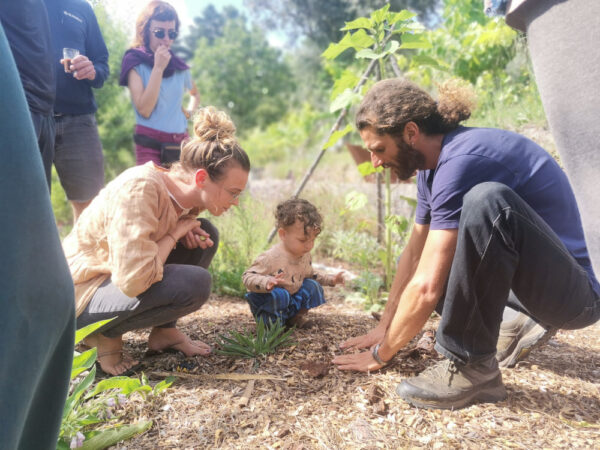
Becoming parents can transform a relationship in ways that are both beautiful and challenging. There are suddenly new responsibilities, new demands and often much less time and space for the couple. We may find ourselves moving between being partners, parents, workers, caregivers, lovers, children of our own parents, and many other roles.
My own experience as a mother of a young child has given me a personal understanding of some of these changes and the many layers that can appear in a relationship after becoming parents. That is why I have a strong calling to help couples navigate this big milestone of becoming a family.
Couples can use this space to explore what has changed, what each person is carrying, what may be getting lost between the different roles, and how you can meet each other again within this new stage of your life together. Many times it is already a big relief to find out that what we are going through happens to many other parents as well and we are not alone in this transition.
You can also come on your own

Sometimes one person in a relationship feels ready to explore what is happening, while the other has a different idea on how and when to do that. You can come on your own to explore your experience of the relationship: the patterns you find yourself in, your own responses and reactions, the different parts of yourself that emerge, and what you are longing for or needing.
Individual sessions can be a space to develop greater awareness of yourself within the relationship and to explore new ways of responding. The work won’t be about changing your partner. It can begin with understanding your own experience and the relationship between you more deeply. We can focus on finding out your needs and how to meet them, explore possible directions where you would like your relationship to go.
If you are looking specifically for individual therapy or clinical mental health support, this may not be the right form of support for you. My individual facilitation focuses on awareness, relationship patterns, conflict and personal exploration rather than diagnosis or clinical treatment.
How it works
The first meeting is a free 30-minute online conversation. It is a chance for us to get to know each other. For you to tell me what is bringing you here and what you would like to explore, and for us to decide together whether continuing to work together feels right.
At this first meeting, we can also discuss what kind of structure may be most appropriate for you and how many sessions might be useful. There is no fixed formula. Some situations benefit from a more focused and structured process, while others need more time and space to unfold.
For couples experiencing high levels of conflict, we can work with a mediation-oriented structure. This can include separate moments to clarify what each person needs, facilitated conversations where both perspectives can be heard, and support in finding areas of understanding, agreement or possible next steps.
For couples who are not necessarily in a crisis, but would like to understand their relationship more deeply, a possible starting point is a series of four facilitation sessions. Across these sessions, we can explore recurring patterns, different perspectives and roles within the relationship, moments of connection and disconnection, and what may want to develop between you.
These are examples rather than fixed packages. The process can be adapted to your situation.
Working together as a couple or individually
If you begin working together as a couple, the sessions remain 2:1 — the two of you with me.
If we begin an individual process, the sessions remain 1:1.
This boundary is important to me as an ethical part of the work. Once a process has begun, I don’t switch from couple facilitation to individual facilitation, or from individual work to working with the couple. This helps create a clear and trustworthy space for everyone involved, and avoids putting me in a position where I would be holding different or conflicting perspectives outside of the agreed setting. If you are unsure which form of support is right for you, this is something we can explore together during the free first conversation.
You may have arrived here looking for couples therapy, relationship counselling or help with a difficult relationship conflict. My work is different from psychotherapy or clinical treatment. I don’t diagnose or treat mental health conditions, and this work is not intended for situations that require clinical or psychiatric support.
Instead, I offer facilitated relationship work rooted in Process Work and conflict transformation, with mediation training informing my approach to situations where a more structured conversation can be helpful. If you are unsure what kind of support would be appropriate for your situation, we can talk about this during the free first conversation.
Is this therapy?

Let's talk
If you are wondering whether this kind of support could be useful for you and your relationship, I invite you to book a free 30-minute conversation with me. You don’t need to have everything figured out before we meet. You can simply bring what is happening for you now, and we can explore together whether this way of working could be supportive.
Or you can directly contact me on Whatsapp if that is your preferable way:
+351 966 498 443
Kasia Szymura